
Dentures – Prestonsburg, KY
Rebuild a Beautiful Smile
Millions of people have suffered the loss of multiple teeth. If you are among them, it is certainly worth your time to consider your tooth replacement options. You might even be thinking about getting dentures. Here at Brookside Dental Care in Prestonsburg, we offer top-quality prosthetics that can help you to rebuild a beautiful, functional smile. Read this page to learn some important information about dentures, and then contact us when you are ready to request a consultation.
Who Is a Good Candidate for Dentures?

Tooth loss can have serious consequences for your daily life. For example, you might find it difficult to eat your favorite foods and smile with confidence. Dentures are often able to address such problems. They are a suitable tooth replacement option for almost anyone who has lost multiple teeth. When you visit us for a consultation, we will help you confirm whether or not dentures are the best way to rebuild your lost dentition.
Effects of Missing Teeth

Missing teeth may be the result of decay, gum disease, injuries, or other factors. Regardless of why you have an incomplete smile, you may face a number of daily challenges due to your condition. For example, you might find it difficult to speak clearly. You could lack confidence in your appearance due to the aging effects of missing teeth. Additionally, you may find it difficult to eat a balanced, nutritious diet due to limited chewing ability.
The good news is that dentures can address such issues. They have the potential to significantly improve your daily quality of life!
What Qualifies You for Dentures?
You may qualify for dentures if:
- You are missing all or most of your teeth in either your upper or lower jaw. If you are missing just one or two teeth, a different treatment option may be better for you.
- Your gums and jawbone are healthy enough to support dentures. You should be free of active gum disease and other conditions that could adversely affect your ability to wear dentures.
- You are looking for a cost-effective tooth replacement option. Dentures are one of the most affordable ways to rebuild lost dentition.
Alternative Tooth Replacement Options
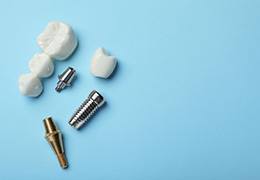
If dentures are not quite right for you, you might qualify for an alternative tooth replacement option:
- A fixed dental bridge uses the remaining natural teeth for support. This type of prosthetic is good for addressing the loss of one or a few teeth. The treatment process is short, and the results can last for years.
- Dental implants are prosthetic tooth roots that get surgically placed into the jawbone. They can support crowns, bridges, and dentures. We often recommend them as the best form of tooth replacement due to their longevity, stability, strength, and benefits for jawbone health.
During your tooth replacement consultation, we can help you compare all of your treatment options so you can make a confident decision about how to move forward.
Types of Dentures
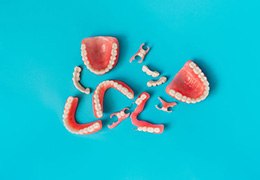
There are a few different types of dentures, each of which comes with its own unique advantages. During your consultation, we will examine your mouth and recommend the type of prosthetic that we believe best fits your particular situation. We might advise you to get partial dentures, full dentures, or implant dentures.
Partial Dentures
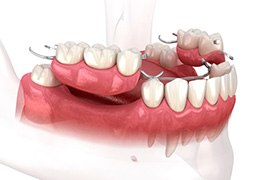
If you still have some healthy natural teeth, we might recommend that you get a partial denture that will fit in around your remaining natural teeth, sort of like a puzzle piece. It can fill in gaps to restore your appearance and improve your oral function. A partial denture usually has small metal or acrylic attachments to help it stay in place.
Full Dentures
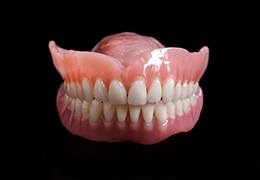
If you are missing all of the teeth in your upper or lower jaw, you might benefit from a full denture. These prosthetics usually have an acrylic base along with acrylic or porcelain teeth. Natural suction or a bit of adhesive helps them to stay secure during eating and speaking.
Implant Dentures
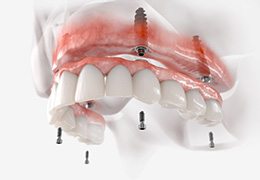
Dental implants are prosthetic tooth roots that get surgically placed beneath the gumline. They bond with the surrounding bone and can provide a strong base of support for dentures. Due to the stability and longevity of implant dentures, we often recommend them as the best option for patients with extensive tooth loss.
How Dentures Are Made
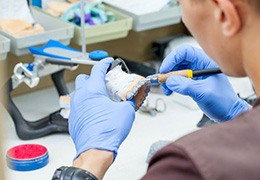
Dentures must be custom-made for each person. Otherwise, their fit, shape, and color simply would not be right! Have you ever wondered about the steps we take to make sure that each denture we provide meets our rigorous quality standards? What are dentures made of, and how exactly do we work with trustworthy dental laboratories to create high-quality prosthetics? Below, you will find some fascinating information. What you discover might just enhance your appreciation for the beautiful new set of teeth that you will soon receive.
What Are Dentures Made Of?
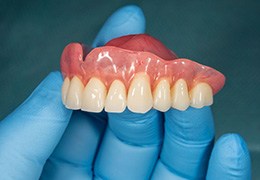
Dentures consist of two main parts:
- The base of dentures is usually made of acrylic. In partial dentures, the base may have small acrylic or metal attachments that help the artificial teeth to stay in place throughout the day.
- The teeth of dentures are often made of acrylic or porcelain. In many cases, acrylic is the best choice for individuals who still have some of their natural teeth, whereas porcelain is favored for people who require full-mouth replacement.
The Denture Creation Process

Here is an overview of the denture creation process:
- Our team takes detailed impressions of your upper and lower gums and record precise measurements of your jaw.
- We send the impressions to a trustworthy dental laboratory, where they create a wax version of your gumline. A machine known as an articulator is then used to place artificial teeth within the wax base.
- The wax-up gets sent to us, and you visit us for a fitting. From there, we continue to coordinate with the dental lab as they work on your final prosthetic. You may need to visit us for a few additional fittings.
- At the lab, technicians boil away the wax base of the denture and replace it with acrylic. When the teeth are securely attached and the prosthetic is almost ready, it gets polished to perfection.
- When your final prosthetic is ready, you return to our office so we can make any necessary adjustments and verify that your new teeth meet both your expectations and ours.
Adjusting to Your New Dentures

It can take a bit of time to adapt to using new dentures. At first, you might experience mild soreness. It could also be a bit challenging for you to speak clearly and eat your favorite foods. However, with time and practice, your dentures should become easy to use. In fact, you can expect them to significantly improve your quality of life! If you have any serious concerns or questions while you are learning to use your new teeth, you are welcome to reach out to our team.
Benefits of Dentures

Missing teeth can lead to a variety of challenges in your daily life. You may find eating your favorite meals difficult, and you might feel hesitant to smile when you spend time with others. Dentures can help with such issues! They offer a reliable solution for tooth replacement, providing a host of advantages that promote your overall health and elevate your quality of life. During your consultation, we can discuss in detail how dentures may benefit you personally. Meanwhile, please review the following overview of the many benefits associated with this treatment:
Psychological Benefits

If you are living without teeth, your mental health may take a downward turn. Your self-esteem and confidence can be significantly impacted, and you may face a greater risk of persistent feelings of sadness or depression. You could also find yourself avoiding social gatherings, missing out on positive interactions that could contribute to your well-being.
With dentures, you can regain a beautiful, natural-looking smile. This restoration can give you the self-assurance to participate in social events, savor your favorite foods, and experience a renewed sense of youth and vitality. Dentures have the capacity to positively influence your outlook and help you embrace life with enthusiasm.
Clearer Enunciation

Speech is the product of interactions between multiple structures, including your teeth! When the teeth are missing, therefore, you might find it challenging to clearly enunciate certain sounds. By filling gaps in your smile, dentures allow your tongue and lips to function naturally. Indeed, with a complete set of teeth, your speech can sound more precise and easily understood. (While learning to speak with dentures may require a short adjustment period, you should soon find that communicating verbally is just as easy as it was before you lost your teeth.)
Improves Nutrition

Chewing a diverse array of foods may become a challenge when you have missing teeth, limiting your diet and affecting your nutritional intake. Dentures restore your ability to bite and chew many different foods, granting you access to fruits, vegetables, proteins, and whole grains. You will enjoy the freedom to eat balanced meals that contribute to better health. Proper chewing also promotes more efficient absorption of nutrients, which can result in increased energy and improved overall well-being.
Preserves Oral Health
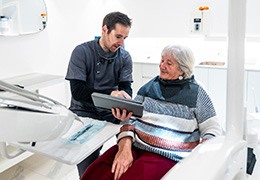
The absence of teeth can cause changes in your mouth, including shifting of the remaining teeth and accelerated wear on your natural enamel. Dentures help maintain your oral structure by filling spaces and supporting proper alignment. Additionally, dentures can help distribute the pressure from eating, thereby reducing wear and damage on any remaining natural teeth.
Expands Opportunity

Missing teeth may affect your confidence in the workplace, making interviews, presentations, or daily interactions more challenging. You might also notice that others perceive you as older than your actual age. Dentures restore a complete, natural-looking smile, allowing you to present yourself as a confident, healthy, and vigorous professional. You might just find that renewing your smile gives you a slight edge as you pursue your career goals.
Dentures Aftercare
Your dentures have the potential to serve you well for several years. In order for them to live up to that potential, though, you need to take care of them! One important thing you can do is simply to make sure you visit us for routine care. By visiting us regularly, you allow us to monitor both the state of your oral health and your dentures. We can provide maintenance and tips that will allow your denture to function well and last as long as possible. If we notice any problems, we will strive to address them before they become serious.
What else can you do to protect your dentures? Here are some useful tips:
Removable Dentures
Remove After Eating
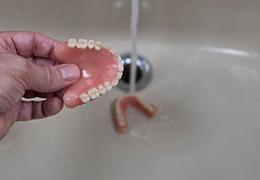
After each meal, you should take out your dentures and thoroughly rinse them. This step helps you get rid of food particles and prevent plaque accumulation, leading to better oral hygiene. Also, keep in mind that you should use cool or lukewarm water for rinsing, since hot water may cause your prosthetic to become warped. By keeping your dentures clean throughout the day, you support the health of your oral tissues and maintain both the comfort and appearance of your smile.
Clean Your Restoration
It is important to have a consistent evening cleaning routine for your dentures. Take them out of your mouth and use a soft-bristled brush in combination with a gentle cleaning agent to brush all their surfaces. Avoid regular toothpaste because it is often abrasive and may cause unsightly scratches. After you finish brushing, immerse your dentures in water or a specialized cleansing solution to keep them moist and preserve their shape. Make sure to rinse them thoroughly before putting them back in your mouth.
Keep Your Dentures Safe
Protecting your dentures from accidental damage requires a few simple precautions. You should always remove your dentures over a folded towel or above a sink filled with water, which will provide a cushion if they fall. Additionally, store your dentures in a secure location out of reach of pets and children, who might be tempted to play with them or even run away with them.
Remove When You Sleep
Taking your dentures out at bedtime allows your gums to rest and promotes healthy circulation. This practice also supports optimal oral hygiene, since soaking your dentures overnight in a cleansing solution eliminates bacteria that can cause odors or infection. (If you want to wear your dentures continuously, you should consult our dental team about fixed tooth replacement options, such as implant dentures.)
Notice Changes
You need to monitor your oral tissues and dentures for any signs of change. Look for gum irritation, sores, infections, or alterations in how your dentures fit. If you detect any of these issues, schedule an appointment with our dental office right away. Timely professional attention can prevent a minor issue from turning into an expensive and lengthy ordeal.